The Wealth Warehouse
Insights & Education
Deep dives on Infinite Banking, wealth strategy, and financial freedom — from David Befort & Paul Fugere.
Military Transition Blueprint
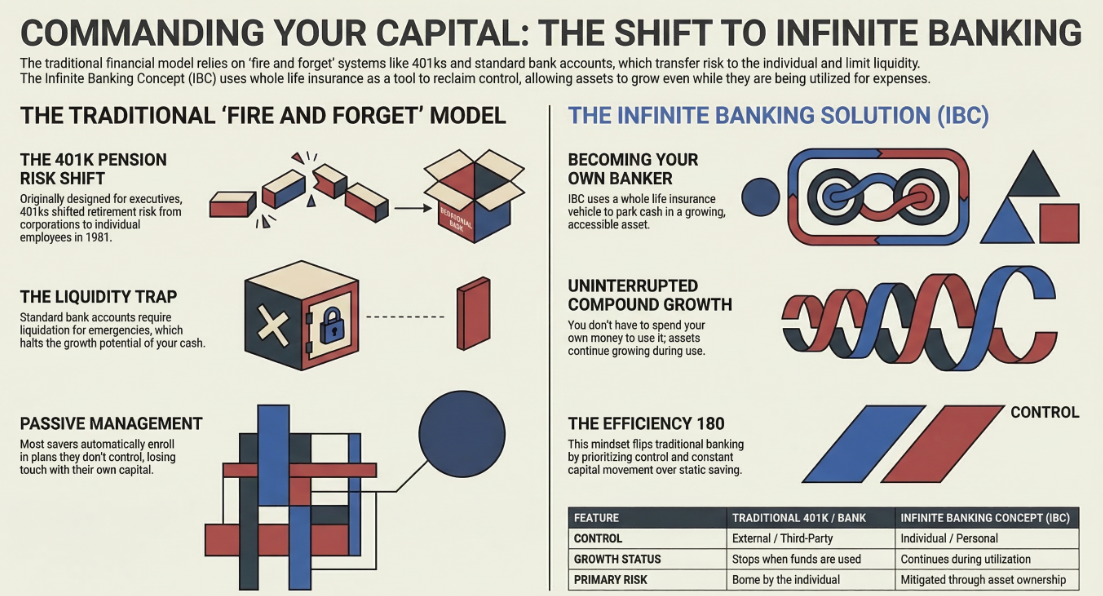
The military teaches you to fire and forget—you launch your asset, trust the automated targeting systems, and immediately move on to the next objective. It is a highly effective strategy for combat. But guess what? We aren't in combat. We are talking about your life savings.

The Three Pillars of Infinite Banking (And Why Nobody Talks About Them)
Banking, policy loans, and the vehicle. These are the three core mechanisms of IBC — and most financial advisors never mention them. Here's what they are and why they matter.

The $210,000 Business Loan Banks Wouldn’t Touch
A profitable business idea can still die in the gap between approval and access to capital. This real-world case study shows how private lenders structured a $210,000 dump-truck deal when traditional banks said no.

Whole Life Insurance Critics Have Never Actually Used It (Here's Why That Matters)
The people who dismiss whole life insurance as a scam typically view it as a product to purchase, not a process to deploy. Once you understand the difference, their criticism falls apart.

Why Paying to Borrow Your Own Money Makes Sense
The common objection 'why would you pay to borrow your own money?' misses a crucial point: in whole life insurance with infinite banking, you're borrowing the insurance company's money, not your own. Your cash value is equity—like home equity—which the insurer uses to fund loans to other policyholders.

The Equity Misconception: Your Cash Value Isn't a Vault of Cash
Many people think cash value in a policy is literal money sitting in a vault. In reality, it's equity—similar to home equity. Banks don't store your home equity in vaults; they use it to fund loans. Insurance companies operate the same way with your policy's cash value.

The Mindset Shift That Separates IBC Practitioners from Everyone Else
Most people who hear about Infinite Banking think about the product. The ones who actually build wealth with it think about the process. Wes Howard explains what changed when his thinking flipped.

IUL vs. Whole Life for IBC: Why the Wrong Product Costs You Years
Thousands of people get sold an IUL when they go looking for Infinite Banking. Here's why that's a problem — and what Wes Howard's three years in the wrong product can teach you before you make the same mistake.

A Lineman, 4 IULs, and One Book: Wes Howard's IBC Story
Wes Howard works with his hands, keeps the lights on, and three years ago made a decision most people at any income level never make. Here's what happened when a North Texas lineman read Nelson Nash's book four times and bet on himself.

Who Gets Rich When You Finance Business Equipment? (It's Not You)
Every equipment purchase you finance is building someone else's wealth. Here's the math nobody shows you — and a different way to think about it.

The Liquidity Trap: Why Your 401(k) Balance Is a Lie
You can have a million dollars in your 401(k) and zero ability to use it when you actually need it. That's not wealth — that's a number on a screen.

Becoming the Bank: What It Actually Means to Finance Other People's Deals
David and Paul didn't just teach IBC — they used it to fund a client's trucking operation and collected the interest themselves. Here's how that works.

Borrowing Your Own Money: Why Policy Loans Are Nothing Like Bank Loans
A policy loan doesn't work the way most people assume. You're not withdrawing your money — you're borrowing the insurance company's money with your cash value as collateral. Here's why that distinction matters.

What Is 'The Infinite Banking Concept' — and What It Is Not
IBC gets misrepresented constantly — by critics who don't understand it and by salespeople who oversell it. Here's the straight version.

Paid-Up Additions (PUAs): The Lever That Makes IBC Actually Work
A standard whole life policy is a terrible IBC vehicle. The secret ingredient is Paid-Up Additions — and most people have never heard of them.

Stealing the Peas: The IBC Mistake That Kills Your System in Slow Motion
Nelson Nash had a name for people who skip repaying their policy loans. He called it 'stealing the peas.' Here's why this single habit separates people who build wealth from people who just own a policy.

How to Reframe Your Thinking from Consumer to Banker (And Why It Changes Everything)
The shift from consumer to banker isn't about the policy. It's about how you think about money moving in and out of your life. David and Paul break down what that reframe actually looks like in practice.

Why Rebekah's Husband Watched Every Episode Before the First Call
Before scheduling a call with David and Paul, Rebekah's husband watched every available episode of the Wealth Warehouse podcast. That due diligence changed everything.

The Opportunity Cost Nobody Talks About (But Everyone Pays)
Every financial decision has a hidden cost — not just the price you pay, but the earnings you give up. Most people never learn to calculate this. Here's why it matters.
The IBC Community: Why the Network Might Matter More Than the Policy
Rebekah said the business opportunities from connecting with other IBC practitioners were 'life-changing.' Here's why the community might be as valuable as the strategy itself.

Why Business Owners Are the Best Candidates for IBC (And What They're Missing)
Business owners finance things constantly — equipment, inventory, operations. Every financing decision is an opportunity to either build someone else's wealth or your own. IBC flips the equation.

Control Your Capital — Or Someone Else Will
David Befort ends every episode with the same phrase for a reason. Here's what 'control your capital' actually means — and what it looks like in practice.
Credit Score Rose 200 Points in 18 Months — Here's What Changed
Rebekah's credit score jumped from mid-600s to over 800 in 18 months — not by credit hacking, but by changing how she thought about money. Here's the mechanism.

6 Principles That Change Everything About How You Think About Money
David and Paul didn't stumble into Infinite Banking. They followed a set of principles that reordered how they see every financial decision. Here are all six.
Insuring Your Kids: Why Rebekah Put Policies on Both Children
Most parents insure their kids by accident or not at all. Rebekah deliberately got policies on both children. Here's why.

'You Don't Get Rich by Paying Cash' — What David Befort Means by That
It sounds provocative. But David's point isn't about debt — it's about the difference between money that recycles and money that disappears. Here's the distinction.

Term vs. Whole Life Insurance: Why David Ramsey Gets Half the Story Right
Dave Ramsey isn't wrong that term insurance is cheap. He's wrong about what that buys you. Here's the full picture — and why 'buy term and invest the difference' misses the point of IBC entirely.
The Skeptic Who Read 'Becoming Your Own Banker' and Changed Her Mind
Rebekah started skeptical about whole life insurance after hearing Dave Ramsey's critique. Then she read Becoming Your Own Banker and attended her first call. Here's what shifted.

Who Should NOT Become Their Own Banker (And Why This Matters More Than Who Should)
IBC gets oversold. David and Paul are direct: this strategy isn't for everyone, and knowing who it's wrong for is just as important as knowing who it's right for.
How a Policy Loan Beats a Bank Loan for Starting Your Business
When Rebekah and her husband wanted to start a business, they had two options: hunt for an SBA loan or use their own policy. Here's why the policy loan won.

The Dump Truck Deal: What It Looks Like When IBC Practitioners Become Lenders
A retired Air Force pilot with a passion for trucking needed capital. His money was locked up in his 401(k) and his house. David and Paul stepped in — and kept the interest for themselves.

Is IBC a Scam? Here's What Reddit Gets Wrong (And Why It Matters)
Search 'infinite banking' on Reddit and you'll find a pile of confident misinformation. David and Paul use the Columbo method to dismantle it. Here's the real breakdown.
From $30K in Debt to Homeownership in 12 Months — A Real Story
Rebekah Waller went from 30K in consumer debt and a 600 credit score to buying her first home within a year of implementing IBC principles. Here's exactly what changed.

When Your Net Worth Lies to You: The Illusion of Wealthy on Paper
You can have a seven-figure net worth and zero ability to act on an opportunity. The Air Force pilot who needed dump truck capital proved this the hard way.

The Colombo Method: How to Challenge Bad Financial Advice Without Starting an Argument
You don't win financial arguments by being right. You win them by asking two specific questions — the same ones Detective Colombo used. David explains the approach.

What Your Financial Advisor Gets Wrong About Whole Life Insurance
Most financial advisors dismiss whole life insurance reflexively. Here's why that reflex is costing their clients — and what a properly designed policy actually does.

Using IBC to Fund Real Estate (Without Touching Your Retirement Accounts)
Real estate opportunities don't wait for bank approvals. IBC gives you capital that moves when you need it to — without the penalties, taxes, or paperwork of retirement accounts.

What Is a 'Wash Loan' and Why It Changes the IBC Math
The wash loan is one of the most misunderstood features of IBC — and one of the most powerful. Here's how it works and why it matters for your returns.

The Death Benefit Is Not a Consolation Prize — It's the Point
Most IBC conversations focus on cash value and policy loans. But the death benefit — the part that goes to your family income-tax-free — is where the strategy reaches its full power.

Why Most People Build Wealth for Banks and Not for Families
The system is designed to transfer your wealth to financial institutions through interest, fees, and taxes. IBC is one of the few strategies that redirects that flow back toward your family.

How IBC Actually Works: A Plain-English Walk Through the Mechanics
No jargon, no sales pitch. Here's exactly how money flows in an IBC system — from premium payment to policy loan to repayment and back again.

IBC for Families: Why This Conversation Needs to Happen at the Kitchen Table
Most IBC conversations happen between business partners or financial advisors. But the strategy works best when both spouses understand it — and commit to it together.

The Modified Endowment Contract (MEC): Why Overfunding Your Policy Is a Problem
There's a limit to how much you can put into a whole life policy before the IRS changes the rules. Understanding the MEC line — and staying under it — is essential to making IBC work correctly.

Why High Earners Are Often the Least Prepared for a Financial Emergency
Earning more doesn't solve the liquidity problem — it often makes it worse. Here's why six-figure earners regularly find themselves cash-poor when it counts.

Policy Loans vs. Bank Loans: The Comparison That Actually Matters
Most side-by-sides between policy loans and bank loans miss the real point. Here's the one that changes how you see the decision.

How to Size Your First IBC Policy (Without Starting Too Big or Too Small)
The most common mistake new IBC practitioners make is getting the premium wrong from day one. Here's how to think about sizing it correctly.

The IBC Glossary: Every Key Term, Explained Simply
IBC has its own vocabulary and getting it wrong leads to bad decisions. Here's a plain-English glossary of the terms that matter most — and why each one is distinct.

The Whole Life Borrowing Strategy Explained
When you borrow against your whole life policy's cash value, you're tapping into an insurance company lending mechanism. This is a strategic financial move in the Infinite Banking Concept—it allows you to use your policy's growing equity without surrendering the policy itself.

Why We Started the Wealth Warehouse Podcast
David Befort and Paul Fugere didn't start a podcast to talk about life insurance. They started it to change how people think about money — from the ground up.

How Banks Really Make Money (And Why High-Income Earners Should Rethink Their Strategy)
Banks are the most profitable businesses in history. They make money on the spread — the gap between what they pay you and what they charge others. Understanding this changes what you do with yours.

Avoiding the Retirement Tax Bomb: The "Rich Man's Roth" and Infinite Banking
You gain liquidity without liquidation, uninterrupted compound growth, and a permanent death benefit that guarantees a massive, income tax-free windfall for the next generation.

Stop Spending Your Own Money
Do you want to take a wild guess at how many millionaires were left sitting around that table? Zero. Not a single one.
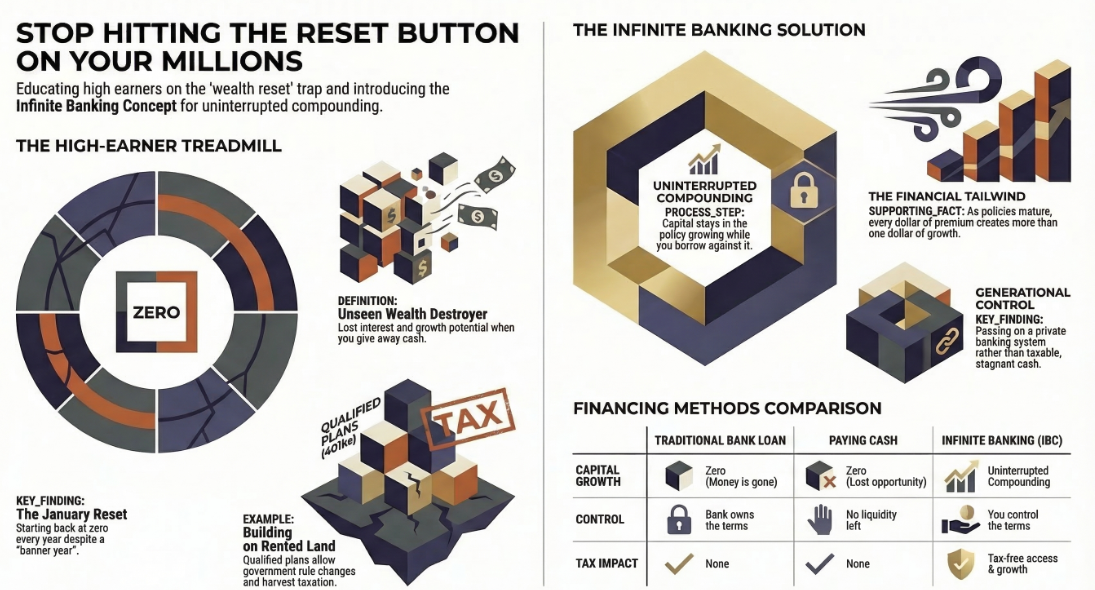
DON'T be a Vanderbuilt - get off the high income earner treadmill
Suddenly, that familiar, sinking feeling hits you right in the gut. Despite clearing more money than you ever have, it still feels like you are starting completely back at zero.

High Earner Arrival Syndrome
Many high earners are technically in the top 10% of income, but they treat their capital like they are in the bottom 50%.

Term vs. Whole Life - Dave Ramsey Rebuttal
Whether it’s the stimulants or the strategy, the energy is high because we are tackling the biggest mental block in finance: The "Bill" Mentality.
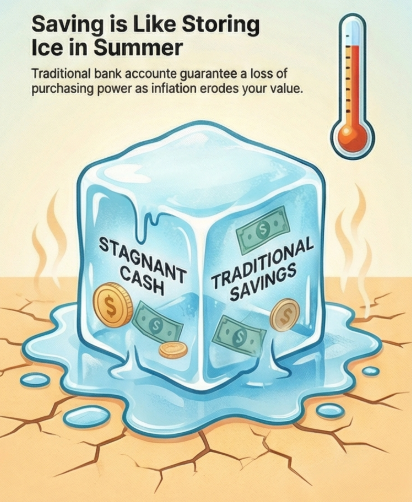
The Inflation LIE: Capitalizing vs. Saving
• The Saver's Recipe: Earn → Save → Spend (drain account) → Start over. • The Capitalizer's Recipe: Earn → Capitalize (into a policy) → Leverage (borrow against it) → Repay → Keep Compounding.
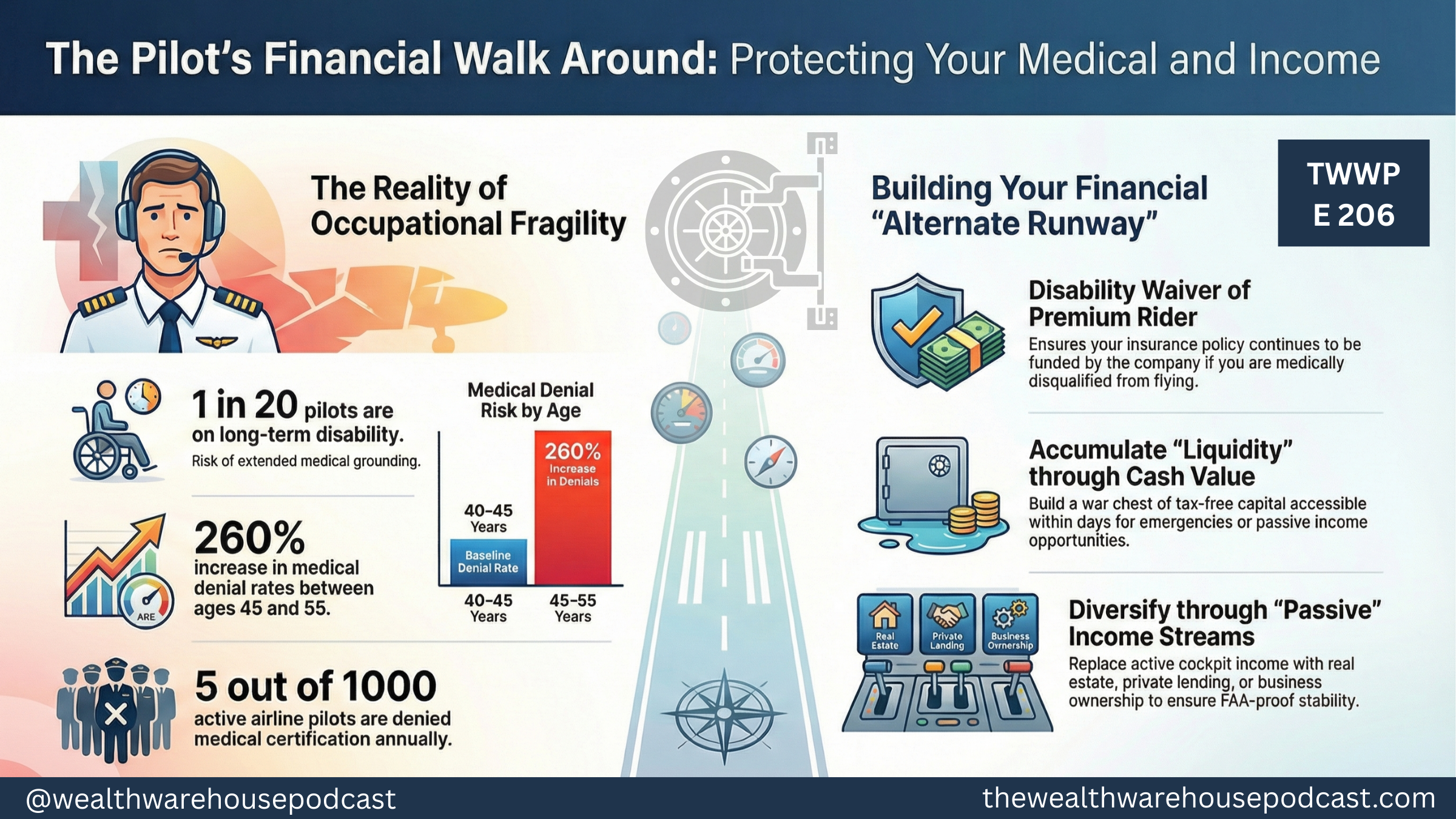
The Pilot's Financial Walkaround
You wouldn’t dare take off without doing a walkaround of your aircraft, yet most pilots haven’t done a walkaround of their finances since flight school. The harsh reality of the aviation industry is that your high income is incredibly precarious; you are exactly one medical disqualification away from an income of zero.
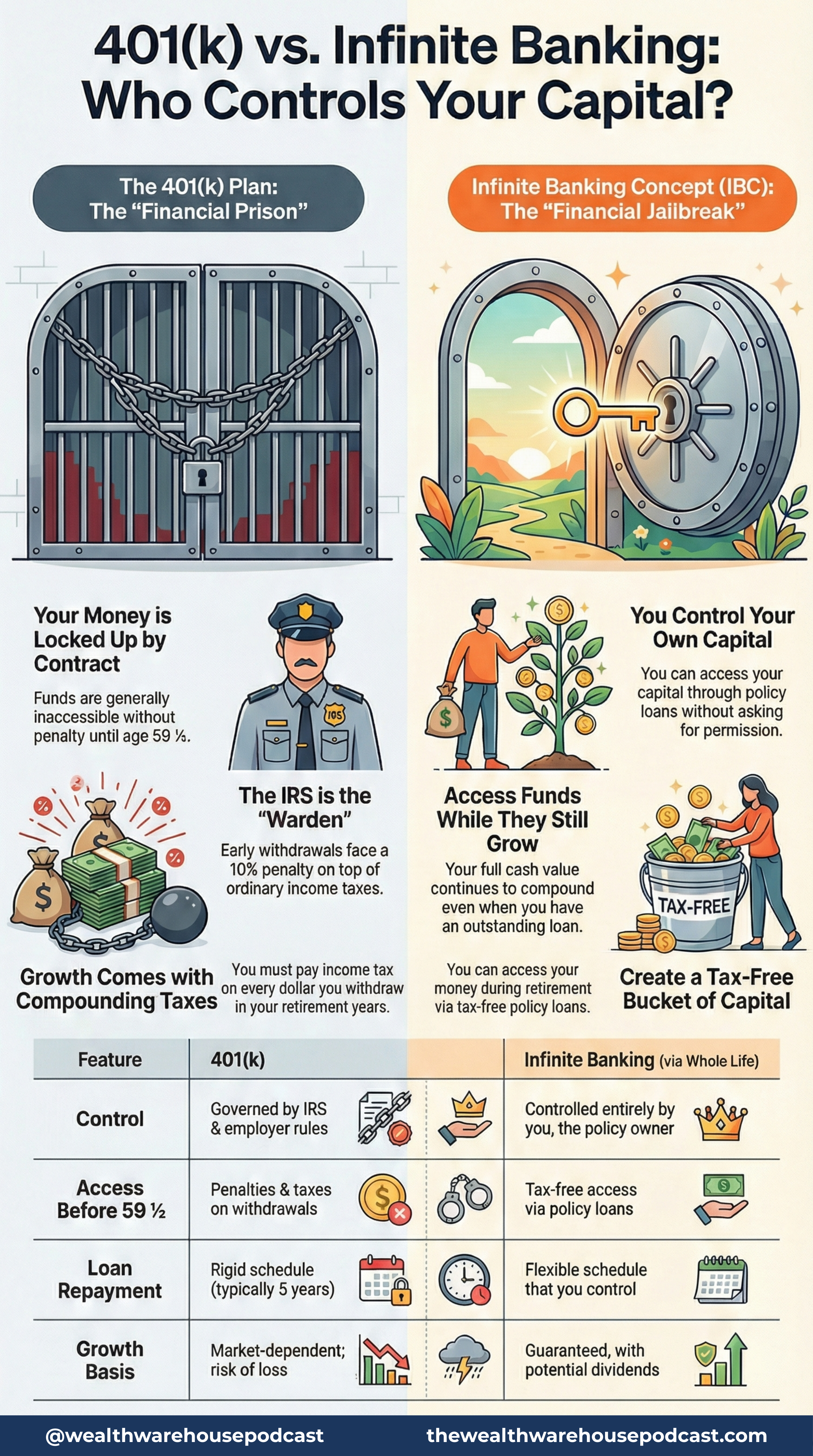
The 401(k) Prison Break
Did you realize that when you enrolled in your 401(k) you essentially signed a contract to lock your money in financial prison until you're 59 and a half?
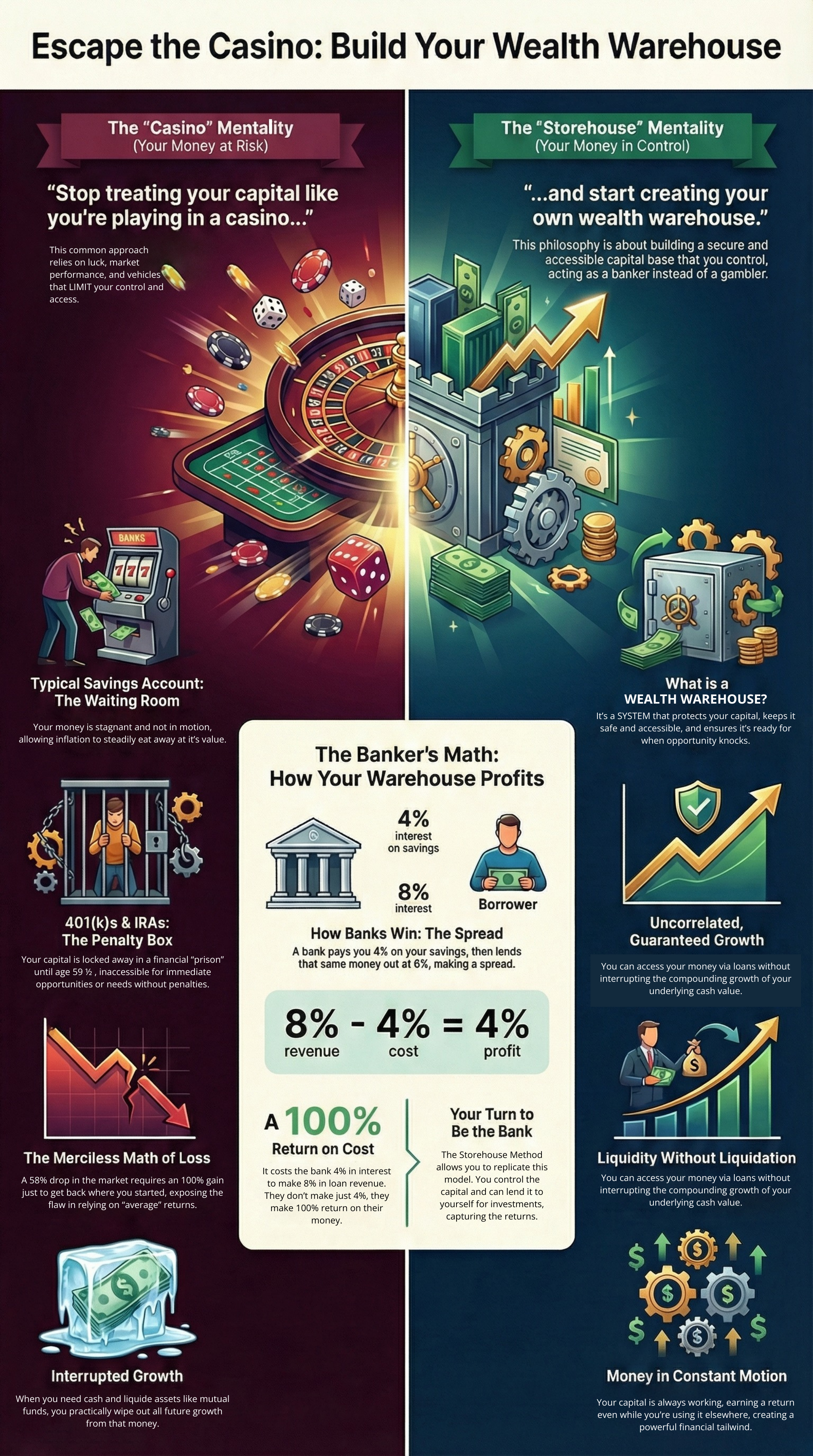
The Storehouse Mentality
Stop treating your capital like you’re in a casino and start building a Wealth Warehouse. Most people treat their money like a child with a birthday hundred-dollar bill—it’s burning a hole in their pocket until they can exchange it for something that loses value immediately.